






























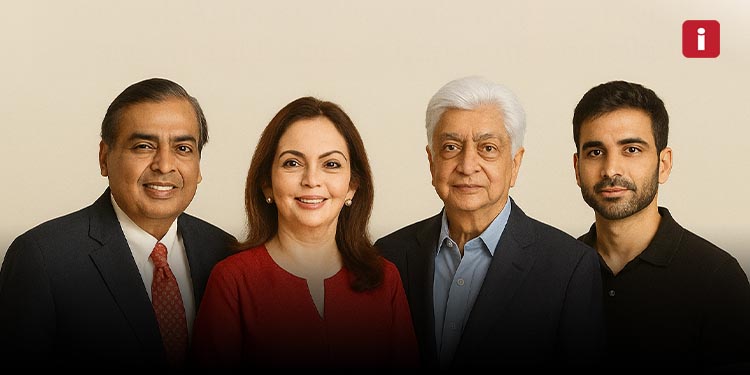
In a world where wealth and influence can change lives, philanthropy stands out as the noblest expression of leadership. In 2025, TIME magazine launched its first-ever TIME100 Most Influential People in Global Philanthropy list, recognizing change makers across the globe who are driving long-term impact through purposeful giving.
Four prominent Indians Mukesh Ambani, Nita Ambani, Azim Premji, and Nikhil Kamath earned a place on this prestigious list, proving that India’s philanthropic spirit is not only alive but setting global standards. Their inclusion alongside the likes of Warren Buffett, Melinda French Gates, Prince William, and David Beckham marks a significant moment for India on the world stage.
Let’s dive into how these visionaries are reshaping India’s future through their philanthropic missions.
Mukesh and Nita Ambani: Catalysts for Grassroots Transformation
Visionary Leadership in Philanthropy
At the helm of Reliance Industries, Mukesh Ambani, and his wife Nita Ambani, Chairperson of the Reliance Foundation, have become synonymous with large-scale, organized giving. Their philanthropic journey is not merely an extension of their corporate success—it is a mission deeply embedded in India’s socio-economic transformation.
In 2024, the Ambanis donated a staggering ₹407 crore, directing funds toward healthcare, education, disaster response, and sports infrastructure. The Reliance Foundation, founded in 2010, has touched the lives of over 72 million Indians across 20,000 villages and urban locations.
Key Initiatives
- Education: Reliance Foundation Scholarships have enabled thousands of underprivileged students to access higher education.
- Healthcare: The Sir HN Reliance Foundation Hospital in Mumbai is a model for affordable yet world-class healthcare.
- Rural Transformation: Programs like Bharat India Jodo aim to make rural India self-reliant by improving livelihoods, water security, and technology access.
- Sports Development: Through the Reliance Foundation Youth Sports initiative and the Indian Super League, the Ambanis are investing in India’s sporting future.
This holistic, multi-sectoral approach is what led TIME to recognize the Ambanis as pioneers of impact-driven philanthropy.
Azim Premji | The Godfather of Indian Philanthropy
Giving at an Unprecedented Scale
Azim Premji, the former Chairman of Wipro, has been redefining what it means to give. Long before giving became fashionable, Premji quietly committed the majority of his wealth to public good. With a donation exceeding $29 billion, he is among the most generous individuals in the world—not just in India.
His life’s mission: to create a more just, equitable, and humane society.
Azim Premji Foundation
Founded in 2001, the Azim Premji Foundation works primarily in education and equity. It collaborates with state governments to reform public education, trains teachers, and supports school infrastructure. Its efforts have directly impacted more than 8 million children and hundreds of thousands of educators.
Empowering Girls Through Education
In 2025, the Foundation launched a ₹2,250 crore scholarship scheme to support the higher education of 2.5 lakh girls across 18 Indian states. This program addresses both economic and gender-based barriers, promoting female empowerment at scale.
Premji’s humble approach, consistent focus, and data-driven impact make him a global icon in philanthropic leadership.
Nikhil Kamath: India’s Youngest Billionaire Philanthropist
The New Face of Indian Giving
At just 37, Nikhil Kamath, co-founder of Zerodha, is redefining what modern philanthropy looks like. In 2023, he became the youngest Indian to sign the Giving Pledge, promising to donate at least 50% of his wealth to charity.
While many billionaires donate in later stages of life, Kamath is doing it now—with boldness and a clear agenda.
Rainmatter Foundation and WTFund
Through the Rainmatter Foundation, Kamath focuses on climate change, sustainability, and biodiversity. His commitment of over ₹120 crore to environmental projects includes reforestation, renewable energy, and rural conservation efforts.
His second initiative, WTFund, empowers young Indian entrepreneurs under 25 by providing non-dilutive grants of ₹20 lakh, allowing them to innovate for social good without giving up equity.
Launching the Young India Philanthropic Pledge
Kamath also spearheaded the Young India Philanthropic Pledge (YIPP), encouraging India’s under-45 ultra-rich to commit 25% of their wealth to charitable causes. The campaign has generated buzz in India’s startup and wealth circles, bringing a new, youthful energy to India’s philanthropy ecosystem.
India’s Growing Global Reputation in Philanthropy
India has always had a cultural tradition of “daan” (giving), but what we’re witnessing now is a professionalized, tech-savvy, and scalable form of philanthropy. The inclusion of these four Indians in TIME100 2025 underlines this transition and places India firmly on the global philanthropy map.
They are not just writing cheques—they’re designing systems, empowering people, and collaborating with global movements.
Why TIME100 Philanthropy Matters for India
Being listed in TIME’s Global Philanthropy list does more than confer prestige:
- Inspires Others: These stories encourage other entrepreneurs and families to give.
- Promotes India’s Soft Power: Just like ISRO’s moon landing boosted our science status, global recognition in philanthropy showcases India’s values on the world stage.
- Attracts Global Collaboration: Recognition increases opportunities for partnerships with international NGOs, multilateral agencies, and academic institutions.
- Encourages Youth Involvement: Kamath’s example, especially, is motivating Gen Z and millennials to think beyond profits and towards purpose.
Final Thoughts
From legacy-driven veterans like Azim Premji to next-gen innovators like Nikhil Kamath, India’s philanthropic landscape is evolving fast. The 2025 TIME100 list is a global nod to the power of Indian generosity, innovation, and vision.
As these leaders continue to give, grow, and galvanize, they not only help those in need but also redefine India’s place in the world not just as a fast-growing economy, but as a nation that leads with heart.