What Is a VPN? What It Does, What It Doesn’t and Do You Need One

You’re at an airport gate, the free Wi-Fi asks for nothing but a click, and you need to check your bank balance before boarding. That’s the moment most people first wonder whether they need a VPN. The honest answer is that a VPN solves some privacy problems very well, does little for others, and is often sold with promises it can’t keep.
The short answer: a VPN (virtual private network) sends your internet traffic through an encrypted tunnel to a server run by the VPN company, so your Wi-Fi network and your internet provider can’t see what you’re doing, and websites see the VPN’s IP address instead of yours. It’s useful on public Wi-Fi, when traveling, and for keeping your browsing private from your internet provider. It doesn’t make you anonymous, stop phishing, or protect you once you log into an account. Good paid VPNs cost roughly $2–$7 a month on longer plans, and a few reputable providers offer free tiers.
How a VPN works, in plain terms
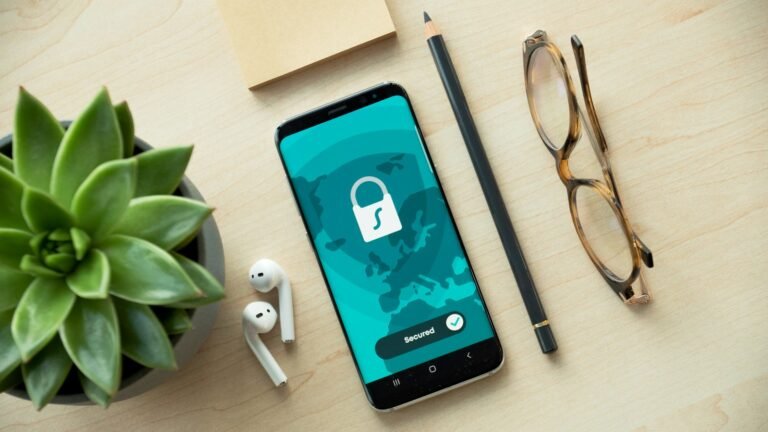
Normally, your device talks to websites through whatever network you’re on: your home router, a coffee shop’s Wi-Fi or your phone carrier. With a VPN switched on, your device first opens an encrypted connection to the VPN provider’s server. Everything then travels inside that tunnel, and the VPN server forwards it to the website.
The US Federal Trade Commission describes it this way: when you use a VPN app, data from your phone, such as your browsing or the apps you use, is first routed through servers controlled by the VPN provider. That last part is the key trade-off. You’re moving trust from your Wi-Fi network and internet provider to the VPN company.
What a VPN does protect
- Your traffic on public Wi-Fi. Anyone else on a hotel, airport or café network can’t read or tamper with your connection.
- Your browsing from your internet provider. Your ISP sees that you’re connected to a VPN, not which sites you visit. That matters because, as an FTC staff report on ISPs noted, internet providers can see their subscribers’ unencrypted traffic.
- Your IP address from websites. Sites see the VPN server’s address, which hides your approximate location.
- Remote work connections. The FTC’s small-business guidance tells employees to only use public Wi-Fi together with a VPN when connecting to work systems.
What a VPN doesn’t do
- It doesn’t make you anonymous. Once you sign into Google, Facebook or Amazon, they know it’s you, VPN or not. Cookies and browser fingerprinting still track you.
- It doesn’t stop scams or phishing. A VPN won’t warn you about a fake bank login page. For that, see our guide to avoiding online scams.
- It doesn’t protect weak passwords. If a site you use is breached, a VPN doesn’t help. A password manager and two-factor authentication do.
- It isn’t antivirus. Some VPN apps bundle malware or ad blocking, but that’s an extra feature, not what a VPN is.
Be wary of marketing that promises “military-grade encryption” or total anonymity. Those phrases describe a feeling, not a measurable guarantee.
Do you actually need a VPN?
| Situation | Is a VPN worth it? | Why |
|---|---|---|
| You often use public Wi-Fi (airports, hotels, cafés) | Yes | Encrypts traffic on networks you don’t control |
| You want your ISP not to see your browsing | Yes | Your ISP only sees a connection to the VPN |
| You travel and want to reach your usual services | Often | Connects you through a server in your home country (check each service’s terms) |
| You work remotely on company systems | Use your employer’s VPN | Business VPNs are set up and managed by IT |
| You only browse at home on your own secured Wi-Fi | Optional | Most sites already use HTTPS; the main benefit is privacy from your ISP |
| You want to be completely anonymous online | No | A VPN alone can’t do that |
VPN prices compared (November 2026)
Prices below are in US dollars from each provider’s own pricing page, checked in November 2026 during Black Friday promotions. Long-term deals renew at higher rates, so we’ve listed renewal prices where providers show them.
| VPN | Free option | Typical paid price | Renewal / regular price | Devices | Refund window |
|---|---|---|---|---|---|
| Proton VPN | Yes: 1 device, servers in 10 countries, no data cap | VPN Plus: $2.99/month for the first year ($35.88) | $83.88 per year after the first year | 10 | Check at checkout |
| Mullvad | No | €5/month (about $5.45), same rate monthly or yearly | Same flat rate | 5 | 14 days (not for cash payments) |
| NordVPN | No | Basic: $2.99/month on a 2-year plan ($80.73 for the first 27 months); $14.99 month to month | $139.08 per year | 10 | 30 days |
| Surfshark | No (trial on 3 devices) | Starter: $2.49/month on a 2-year plan ($67.23 for the first 27 months) | Not listed on the pricing page | Unlimited | 30 days |
Sources: Proton VPN pricing, Mullvad pricing, NordVPN pricing and Surfshark pricing. Sales tax may apply. We have no affiliate relationship with these companies.
The renewal trap
The biggest surprise for VPN buyers is the second bill. NordVPN Basic, for example, costs $80.73 for the first 27 months on its 2-year deal, then renews at $139.08 a year. Proton VPN Plus jumps from $35.88 to $83.88 after year one. Mullvad is the exception: one flat monthly price with no long-term lock-in. Put a reminder in your calendar a week before renewal, and cancel or switch if the new price doesn’t suit you.
How to choose a trustworthy VPN
The FTC’s advice for shopping for a VPN app comes down to four checks: research the app before you get it, review its permission requests, make sure it encrypts your information, and check whether it shares your data with third parties. In practice:
- Read the privacy policy for what’s logged and whether data is shared with advertisers.
- Look for independent audits of the no-logs claims, published by the provider.
- Check the protocols. Modern options such as WireGuard and OpenVPN are standard among reputable providers.
- Avoid unknown free VPN apps. Researchers cited by the FTC found that some VPN apps didn’t use encryption at all and requested unexpected permissions. If a VPN is free and has no paid plan, ask how it makes money.
- Check the kill switch. It blocks traffic if the VPN drops, so your real IP isn’t exposed.
- Match device limits to your household: 5, 10 or unlimited devices.
How to set up a VPN in five minutes
- Sign up on the provider’s official website, not through an ad or a look-alike app.
- Download the app from the official app store or the provider’s site.
- Sign in, and turn on the kill switch and auto-connect on untrusted Wi-Fi in the settings.
- Choose “Fastest” or a nearby server for everyday use.
- Check that it works: search “what is my IP” with the VPN off and on; the address should change.
Using a VPN is legal in the United States and Canada. What you do while connected is still subject to the law and to each website’s terms of service.
Frequently asked questions
Is a free VPN safe?
Some are, many aren’t. A free tier from a company that also sells paid plans, such as Proton VPN Free, is far safer than an unknown free app supported by ads or data sales.
Will a VPN slow down my internet?
A little, usually. Encryption and the extra trip to the VPN server add some delay. Choosing a nearby server keeps the slowdown small.
Do I need a VPN at home?
Not for basic security if your home Wi-Fi uses WPA2 or WPA3 and the sites you visit use HTTPS. The main home benefit is hiding your browsing from your internet provider.
Does a VPN hide my activity from Google?
Only your IP address. If you’re signed into a Google account, Google still knows the activity is yours.
Should I use a VPN on my phone?
Yes, if you use public Wi-Fi on your phone. Set the app to connect automatically on networks you don’t trust.