





























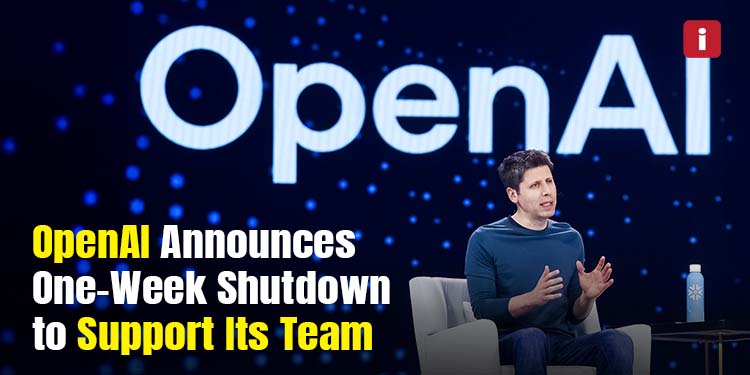
In an important step in creating waves in the technical industry, Openai has announced a rare, extensive closure of the company for a week, which aims to provide very important breaks to employees and address the growing concerns of burnout and storage. This decision comes at an important time, as the company is facing pressure to increase the pressure from participants such as meta.
A strategic stagnation after months of intensive work
Over the past year, Openai has been at the center of global attention with rapid growth and distribution of its generative AI tools, including the ongoing work on chatgpt, GPT-4 and GPT-5. Internally, however, this progress has reached a price.
Employees reportedly work for 80 hours per week, expanding the product innovation at an tireless pace. According to sources familiar with the case, the leadership of Openaii recognized the unstable character of this plan and decided to stop operations throughout the week to let employees relax and recover.
Meta’s Hiring Surge Raises Pressure on OpenAI
The announcement also comes amid reports that Meta has hired several of OpenAI’s top researchers in recent months. According to Wired and other outlets, Meta has recruited at least seven senior researchers, including prominent names like Lucas Beyer, Alexander Kolesnikov, Xiaohua Zhai, and Trapit Bansal—all of whom were instrumental in advancing OpenAI’s AI models.
Some of these hires were reportedly offered compensation packages exceeding $100 million, underscoring the fierce AI talent war currently unfolding among major tech giants.
Leadership Warns of Poaching Risks During Shutdown
OpenAI’s Chief Research Officer, Mark Chen, issued a cautionary internal message, warning employees to be mindful of external recruitment efforts, especially during the break.
“Meta knows we are offline,” Chen stated, urging employees to remain aware of the timing and tactics used by rival companies during periods of downtime.
Re -Cecquiring Compensation and Storage Strategies
The disadvantage of large researchers has allegedly pushed Openai to reconsider its compensation structure, and historically hangs on competitors such as Google and Meta.
While Openai is known for its mission-driven culture and groundbreaking work with AI security and adaptation, financial differences become difficult to ignore because the border dollar offer becomes more common in the industry. Inner sources of the company say that there is a discussion that is going on to offer better equity, encouragement and storage package to existing employees.
Why does it mean something to the AI industry
Steps to close operations – even though they are temporary – highlight some major trends and challenges the AI region faces:
Burnout in AI -Team: High -pressure innovation cycles take a duty on mental health and productivity.
Talent warriors intensifying: Large technology companies are ready to offer outstanding compensation to attract the top AI talent.
Culture vs. Compensation: Assignment -centric start -up will now compete with deep wallets.
Stability in AI development: Openai stagnation refers to speed, preferences and a comprehensive industry around humans.
What is next for Openai?
Together with GPT-5 and other projects in the pipeline, Openai’s management focuses on rapid innovation with internal stability. A shutdown of a week is not just a gesture-it is an important reinforcement. Further challenge lies in maintaining talent, improving employees’ welfare and closing the growing competition in a global AI race.
Final thoughts
Openai Company’s width shutdown is rare, but describes steps. It speaks to the intensive pressure and the growing feeling that runs the AI industry – people – not just the models – are the originals of innovation. If it determines a new standard for the culture of the technology company or becomes a precautionary history, it depends on how Openiai moves forward in the rapidly developed landscape